

A home’s appearance is shaped by more than its paint color or architectural style. Clean outdoor spaces, healthy trees, maintained fences, and carefully selected exterior finishes can all influence how a property looks from the street and how enjoyable it feels from the inside. Fortunately, a backyard improvement does not always require a major renovation or an extensive construction project. Small, focused updates can make outdoor areas appear cleaner, more intentional, and easier to maintain.
This guide explores eight practical ways to refresh the look of your home. Some improvements involve routine landscape maintenance, while others focus on larger elements such as trees, fences, exterior walls, and roofing. The right approach depends on your property’s condition, your budget, and the amount of time you want to spend maintaining the results. A thoughtful backyard improvement can also complement existing landscaping rather than requiring you to redesign the entire property.
From using blowers to clear away leaves and debris to evaluating whether professional tree care is needed, these strategies can help you identify worthwhile improvements. You’ll also find guidance on selecting equipment, working with professionals, maintaining fences, and considering exterior painting services when your home’s exterior needs a more noticeable refresh.
1. How Can Blowers Improve My Home’s Curb Appeal?

The Importance of Regular Cleaning
When people think about boosting curb appeal, they often think about fence staining, exterior painting services, or roofing. However, you can start a little smaller. Outdoor surfaces can lose their polished appearance surprisingly quickly. Leaves, grass clippings, small branches, dirt, and other debris can collect along walkways, patios, driveways, garden beds, and other visible areas. Even when the landscaping itself is attractive, scattered debris can make the property look neglected. Regular cleanup is therefore one of the simplest ways to support a backyard improvement without making a major investment.
Blowers can make routine cleanup more efficient by moving loose material away from hard surfaces and gathering it into manageable areas for collection. They can be particularly useful after mowing, trimming shrubs, or completing other landscaping work. Clearing debris from walkways can also make outdoor areas feel more orderly, while cleaning around fences and garden borders can help define the different parts of the property.
The frequency of cleanup depends on the season, the amount of vegetation around the property, and how quickly debris accumulates. A property surrounded by mature trees may require more frequent attention than a smaller yard with limited vegetation. Establishing a regular cleanup routine can keep small maintenance needs from becoming a larger visual problem.
So, while it might be tempting to contact local roofers and undertake a bigger more impactful project, smaller has its perks. Safer, cheaper, and still impactful overall!
Choosing the Right Blower for Your Needs
The right blower depends on the size of the property, the type of debris being moved, and how often the equipment will be used. Smaller properties may only require a lightweight model designed for leaves and grass clippings, while larger yards can benefit from equipment with greater airflow and longer operating capacity.
Homeowners should also consider storage requirements, noise levels, power source, and ease of handling. Electric models may be convenient for routine residential cleanup, while other options may provide more power for larger outdoor areas. The goal is not necessarily to choose the most powerful equipment available but to select an option suited to the actual work involved.
When evaluating blowers, consider where the equipment will be used and how frequently it will be needed. A model that is comfortable to handle can make routine maintenance less cumbersome. Homeowners who regularly clear large amounts of debris may also want to consider whether additional landscaping equipment would complement the blower.
Used appropriately, a blower can help maintain a cleaner appearance between larger landscaping projects. That consistency matters because a backyard improvement is often most effective when individual upgrades are supported by ongoing maintenance.
2. What Role Does Agricultural Equipment Play in Home Landscaping?

Essential Tools for Homeowners
Some residential landscaping projects involve more than a mower, rake, or handheld trimmer. For example, if you’re focused on fence staining, you’ll need some special brushes or rollers, stain, and of course, wood sealant. Depending on the size and layout of a property, agricultural equipment can provide useful capabilities for moving materials, preparing soil, maintaining larger planted areas, or handling demanding outdoor tasks.
For example, larger rural or semi-rural properties may have substantial areas that require specialized maintenance. Equipment designed for agricultural applications can sometimes support landscaping projects involving soil preparation, material movement, vegetation management, or other tasks that would be difficult to complete efficiently with basic hand tools.
The key is matching the equipment to the scale of the project. Using oversized machinery for a small residential space may create unnecessary complications, while attempting a large landscaping project with inadequate tools can make the work considerably more time-consuming. Homeowners should think about the property itself, the specific task, and how frequently the equipment will be needed.
Equipment can also influence the planning of a backyard improvement. Before purchasing or renting machinery, consider access points, storage, terrain, and the condition of the area being worked on. For example, if you’re tree pruning, you’ll want pruning shears, maybe some gardening gloves, or even goggles to protect your eyes from debris. These practical factors can determine whether a particular piece of equipment is useful or simply creates another challenge.
Renting vs. Buying Agricultural Equipment
Purchasing specialized agricultural equipment may make sense for homeowners who have substantial property or recurring maintenance needs. However, occasional projects may not justify the cost, storage requirements, maintenance, or long-term commitment associated with ownership. Renting can provide access to equipment for a specific project without requiring a permanent investment.
The decision should begin with an honest assessment of how often the equipment will be used. If a machine would sit unused for most of the year, renting may be more practical. Conversely, homeowners who regularly maintain extensive acreage may find that ownership provides greater convenience over time.
Rental availability, operating requirements, transportation, and the length of the project should also be considered. Some equipment may require specialized handling or additional accessories, which can affect the overall cost. Asking rental providers about the equipment’s intended applications can help prevent choosing a machine that is unsuitable for the property.
A backyard improvement should make the property more functional and attractive rather than create unnecessary expenses. For many homeowners, renting specialized equipment for a single project can provide the capabilities needed while keeping the overall improvement manageable.
3. How Do I Find Reliable Local Tree Removal Services?
Assessing the Condition of Your Trees
Trees can be major visual features of a property, but their condition can change over time. Dead branches, visible decay, storm damage, leaning trunks, exposed roots, or declining foliage may indicate that a tree requires professional attention. Determining whether a tree should be removed is not always straightforward, particularly when the tree is large or positioned close to a home, fence, driveway, utility line, or other structure.
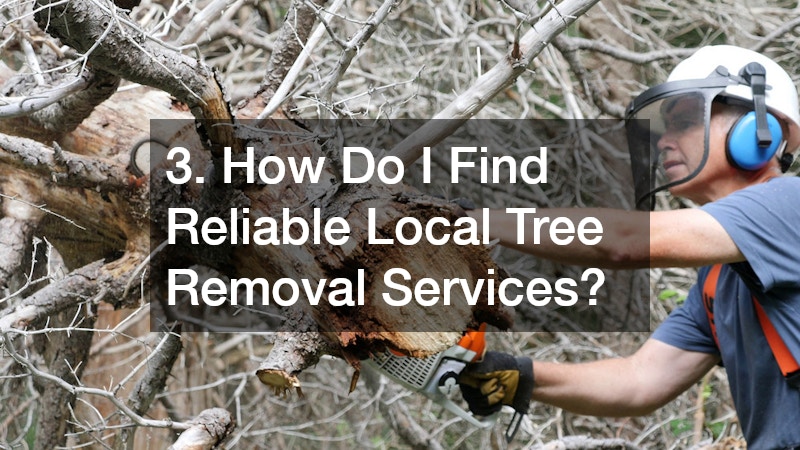
Local tree removal professionals, better known as arborists, can evaluate the tree and surrounding conditions before recommending an appropriate course of action. In some cases, removal may be necessary. In others, pruning, maintenance, or monitoring may be sufficient. Seeking an evaluation can help homeowners understand the condition of a tree before making a decision.
The surrounding landscape is also important. A tree may appear healthy from a distance while having structural concerns that are less obvious from the ground. Branch placement, trunk condition, soil conditions, and previous damage can all affect how a tree should be managed.
Tree removal can have a noticeable effect on a backyard improvement because removing one tree may change light levels, views, available space, and the overall balance of the landscape. Before removal, homeowners may want to consider how the area will look afterward and whether another landscaping feature could eventually occupy the space.
Questions to Ask An Arborist Before Hiring Tree Removal Experts
Before selecting a provider for local tree removal, homeowners should ask what services are included and how the work will be approached. Questions about evaluation, removal, cleanup, stump services, and property protection can help clarify the scope of the project.
It is also useful to ask how the company handles trees located near structures or other obstacles. A large tree may require careful planning to reduce the possibility of damage to nearby landscaping and property. Homeowners can ask what precautions will be taken and whether the provider has experience with similar situations.
Scheduling and cleanup should also be discussed in advance. Removing a tree can leave behind branches, wood, sawdust, and other debris, so homeowners should understand whether cleanup is included. If stump removal or grinding is needed, that should be addressed before work begins as well.
When comparing local tree removal providers, look beyond a simple price comparison. Consider the company’s experience with the type of tree and property involved, the scope of the proposed work, and how clearly the service is explained. Good communication can make a significant difference when a tree is being removed from an important part of the landscape.
4. What Should I Know About Hiring Tree Cutters?
The Benefits of Professional Tree Cutting
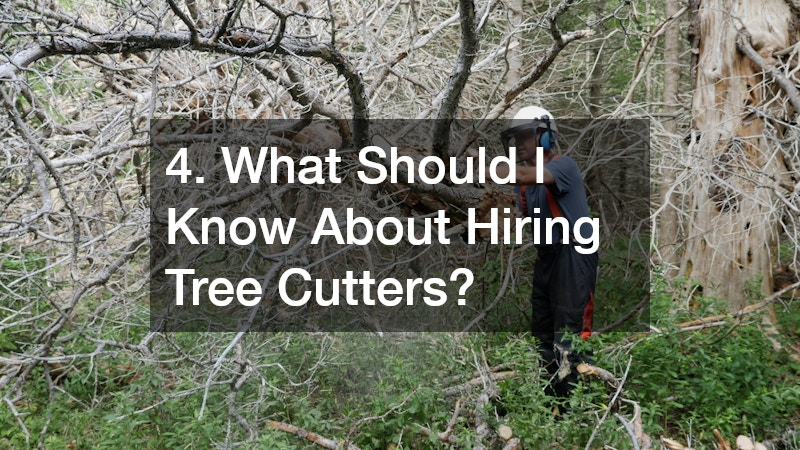
Tree cutting can involve substantial physical and safety considerations, particularly when mature trees are involved. Professional tree cutters have experience assessing branches, trunks, surrounding structures, and access conditions before beginning work. Their expertise can help determine how a tree or individual branches should be handled based on the property’s layout.
Professional cutting can also help homeowners address trees that have become overgrown or interfere with other elements of the landscape. Removing selected branches may open views, improve clearance, or allow more light to reach parts of the yard. In some cases, carefully planned cutting can support a larger backyard improvement by making the available outdoor space easier to use.
Another consideration is the size and location of the tree. A tree growing close to a roof, fence, driveway, or power infrastructure may present challenges that are difficult for an inexperienced homeowner to manage. Professionals can evaluate these conditions and determine what equipment and techniques are appropriate for the work.
Tree cutting can also be part of ongoing property maintenance rather than a one-time response to damage. Addressing problematic growth before it becomes a larger issue may help homeowners maintain a more organized landscape and reduce conflicts between trees and nearby structures.
Safety Considerations in Tree Cutting
Safety should be a central consideration whenever tree cutting is performed. Falling branches and sections of a tree can move unpredictably, and the risks increase when work takes place near buildings, vehicles, fences, or people. Professional crews can assess the area and establish an appropriate work zone before cutting begins.
Homeowners should keep people and pets away from active work areas and follow any instructions provided by the tree service. Vehicles, outdoor furniture, garden decorations, and other movable items may also need to be relocated before work starts.
Overhead utility lines require particular caution. Trees growing near electrical infrastructure should not be treated as ordinary landscaping projects. Homeowners should communicate the presence of utility lines to the service provider so the situation can be evaluated appropriately.
The overall condition of the ground matters as well. Slopes, wet soil, landscaping features, and restricted access can all affect how equipment and workers move around the property. A professional assessment accounts for these factors rather than treating the tree as an isolated object.
When tree cutting is part of a backyard improvement, safety should take priority over speed or convenience. Proper planning can help the project proceed in an organized manner while protecting the surrounding property and everyone nearby. It can also help homeowners avoid unnecessary damage to landscaping, structures, vehicles, and other outdoor features. Before work begins, consider how the tree’s removal or trimming will affect the rest of the yard. A large tree may provide shade, privacy, or visual balance, so removing it can change the character of the space. Planning for those changes can make it easier to incorporate new landscaping or other improvements afterward. Professional guidance can also help determine whether cutting, pruning, or complete removal is the most appropriate solution for the tree and the property.