

Trees form the backbone of any healthy outdoor landscape, offering shade, beauty, and structural value to residential properties. However, because trees operate on long growth cycles, health issues often develop quietly behind the bark or deep within the soil before obvious warning signs appear. By the time a mature tree displays severe leaf drop or visible decay, an underlying infection or infestation may have already progressed for months or even years. Spotting early symptoms requires a trained eye and an understanding of how seasonal stress, fungal pathogens, and environmental factors interact. Taking proactive steps to monitor leaf health, bark texture, and root stability allows property owners to intervene while solutions are still manageable and cost-effective.
Preventing tree diseases before they take hold is significantly easier than attempting to reverse widespread internal decay. A comprehensive health strategy combines routine visual inspections, proper soil management, strategic watering practices, and targeted sanitation measures. When property owners take time to observe subtle shifts in canopy density or fungal growth near the trunk, they can address minor issues before structural integrity is compromised. This complete guide provides actionable guidance on identifying common arboreal diseases, implementing effective preventive care, and knowing precisely when to bring in professional assistance to keep your landscape thriving.
Inspect Leaves Regularly for Discoloration, Spots, and Premature Dropping
Leaves serve as the primary diagnostic window into a tree’s overall health, often reflecting root stress, nutrient deficiencies, or active fungal infections long before other symptoms surface. Inspecting foliage throughout the spring and summer growing seasons helps you catch diseases like leaf spot, powdery mildew, and anthracnose at their onset. Look closely at both the upper and lower surfaces of leaves for unusual brown or black blotches, yellowing veins, or powdery white residue. Pay attention to whether leaf dropping is happening uniformly across the whole tree or isolated to specific branches, as targeted defoliation typically points to localized fungal or pest damage rather than general drought stress. Early identification at the foliage level gives you the best opportunity to treat the problem with organic fungicides or simple cultural adjustments.
Fungal pathogens thrive in moist environments where standing water remains on leaves for extended periods, making atmospheric humidity and poor air circulation major factors in disease transmission. When leaves remain wet continuously for more than twelve hours, fungal spores absorb moisture, germinate, and penetrate the protective outer cuticle of the foliage. Spores spread rapidly through splashing rain or overhead irrigation systems, jumping from infected leaves to healthy branches nearby. Inspecting the canopy after prolonged wet weather allows you to identify fungal leaf spots while they are limited to isolated clusters rather than widespread damage.
Common leaf symptoms to watch for during weekly canopy inspections:
-
Dark brown or black blotches: Often caused by anthracnose or black spot fungal infections, typically appearing after wet spring weather.
-
Powdery white or gray film: A classic indication of powdery mildew, which coats the foliage surface and starves the leaf of sunlight.
-
Bright orange or rust-colored pustules: Frequently points to rust fungi, which move between alternate plant hosts over the season.
-
Yellowing leaf tissue between green veins: A clear sign of interveinal chlorosis, usually tied to root damage or iron lockouts in alkaline soil.
When leaf spot diseases or rust pathogens are detected early, immediate sanitation steps prevent the issue from spreading across the entire canopy or neighboring foliage. Gather and dispose of infected leaves as soon as they fall, ensuring they are removed from the property rather than added to home compost piles where spores can overwinter. Adjust nearby irrigation systems to prevent water from spraying directly onto the leaves, as sustained moisture creates the ideal environment for fungal spores to germinate. If seasonal defoliation continues into late summer, consulting a reputable local tree company can help you determine whether deep-root fertilization or specialized soil treatments are necessary to rebuild canopy strength.
Examine Bark Surfaces for Sunken Cankers, Oozing Sap, and Deep Cracks
The bark acts as a protective shield against wood-rotting fungi, boring insects, and extreme weather fluctuations. Regularly walking around your trees to inspect the trunk and main scaffold branches allows you to detect structural compromises before trunk failure occurs. Keep an eye out for sunken, discolored patches of bark, which often indicate bacterial or fungal cankers consuming the underlying vascular tissue. Oozing sap, white foam, or sawdust-like frass accumulated in bark crevices can signal active insect tunneling or bacterial wetwood infections. Deep longitudinal cracks that penetrate past the outer bark into the sapwood require immediate attention, as they create open entry pathways for airborne spores and decay-causing microorganisms.
Understanding the root cause behind trunk damage is essential for selecting the appropriate treatment, as mechanical injuries invite pathogens that permanently weaken structural integrity. When a tree suffers a wound from lawn equipment or extreme freezing events, the surrounding vascular tissue tries to wall off the damaged section through a process known as compartmentalization. If wood-decay fungi invade the wound before the tree seals the tissue, decay develops internally while the exterior appears stable. Monitoring bark integrity ensures you spot weeping wounds, wood softening, or localized dieback before structural weakness threatens the entire tree structure.
Maintaining the integrity of outer bark requires minimizing mechanical injuries from lawnmowers, string trimmers, and improper climbing equipment. Avoid driving heavy equipment over the root zone, as trunk-base impacts frequently strip away protective layers and invite root-rot pathogens. If you notice localized bark damage or minor weeping spots, clean the surrounding area with a dry brush and ensure the trunk receives good air circulation. In cases where large branches show significant structural cracks or deep cankers, scheduling a professional tree trimming service ensures that compromised limbs are removed cleanly without stripping healthy bark down the trunk.
Monitor the Root Collar for Fungal Growth and Bark Separation at Ground Level
The root collar—the flared area at the base of the trunk where wood transitions into roots—is one of the most critical yet frequently overlooked areas of tree anatomy. Diseases that strike the root collar, such as Armillaria root rot or Phytophthora crown rot, directly threaten the structural stability of the entire tree. Inspect ground level regularly, clearing away deep mulch, soil build-up, and leaf litter that rest directly against the trunk. Look for fungal fruiting bodies like mushrooms, conks, or brackets pushing up through the soil or growing directly from the lower bark. Soft, spongy bark or sections where the outer layer easily peels away from the wood beneath are strong indicators of active wood decay.
Root rot pathogens quietly destroy the primary structural roots that anchor the tree in place, often showing minimal top-canopy symptoms until the decay is advanced. As roots die beneath the surface, the tree loses its ability to absorb water and essential minerals, leading to sudden canopy thinning or branch dieback during warm summer periods. Additionally, compromised root systems lose their mechanical grip in the soil, making infected trees extremely prone to sudden uprooting during rainstorms or heavy wind gusts. Checking the stability of the root flare during routine lawn care allows you to spot ground cracking or fungal clusters before a catastrophic fall happens.
Critical root collar warning signs to evaluate around the trunk flare:
-
Fungal bracket or mushroom growth: Wood-decay fungi growing directly from root flares, signaling severe internal rot.
-
Soft, decaying, or sloughing bark: Bark near the soil line that crumbles, peels easily, or feels soft when lightly pressed.
-
Absence of a visible root flare: A trunk that enters the ground straight like a telephone pole, indicating deep planting or excess soil build-up.
-
Deep soil cracking or ground upheaval: Freshly cracked soil or raised ground on one side of the tree flare, indicating root movement.
Root collar problems are almost always compounded by excessive soil moisture, deep planting, or dense ground cover that prevents the trunk base from drying out. To protect this vital area, pull mulch back 3 to 4 inches away from the bark, creating a ring that resembles a donut rather than a volcano. If you discover advanced fungal conks or soft decay along the main structural roots, the tree may pose an imminent fall risk during high-wind events. Engaging emergency storm damage specialists allows for a formal hazard assessment to determine whether the tree can be stabilized or if controlled removal is necessary to protect nearby structures.

Sterilize Tool Blades Between Cuts to Stop Pathogen Transmission
Pathogens are easily spread from an infected branch to a healthy one through dirty hand saws, loppers, and hand shears. Fungal spores and bacterial strains can survive on metal blades for days, waiting to be deposited directly into fresh pruning wounds on healthy trees. To establish a robust sanitation protocol, clean your pruning equipment thoroughly before moving between trees or even between different sections of the same tree. Rubbing alcohol (70% concentration) or a standard disinfectant spray works exceptionally well for rapid field sterilization because it evaporates quickly without corroding carbon-steel tools.
Pruning wounds serve as immediate open entry points for bacteria and fungal spores floating through the air or residing on tool surfaces. When an unsterilized blade cuts into diseased wood containing vascular wilt pathogens, microscopic spores stick to the blade, are carried by sap, and transfer straight into the healthy sapwood of the next branch. This mechanical transmission bypasses the tree’s natural bark defenses, introducing infections straight into the core plumbing system. Taking sixty seconds to clean equipment between cuts dramatically reduces cross-contamination risks across your landscape.
Essential tool maintenance steps for disease prevention:
-
Clean off organic debris: Scrub away sap, pitch, and dirt from blades using warm soapy water or a stiff wire brush.
-
Apply liquid disinfectant: Spray or dip blade surfaces using 70% isopropyl alcohol or commercial household disinfectant.
-
Allow proper dwell time: Let the disinfectant sit on the metal surfaces for at least sixty seconds to neutralize pathogens.
-
Dry and lubricate tools: Wipe blades dry and apply a light coat of mineral oil to prevent rusting during storage.
In addition to sterilizing blades between individual cuts on diseased plants, always remove sap build-up and dirt using wire brushes and warm soapy water at the end of the workday. Keeping sharp blades is equally vital, as dull tools crush plant tissue rather than slicing it cleanly, leaving jagged edges that take significantly longer to callus over and heal. When managing large residential canopy projects that require heavy equipment or high-altitude work, hiring local tree pruning services guarantees that properly maintained, commercial-grade equipment is utilized across your landscape.
Prune Interior Limbs During Dormant Seasons to Maximize Canopy Airflow
Dense tree canopies trap stagnant air and ambient moisture, creating a warm, humid microclimate where fungal diseases thrive. Pruning out crossing, crowded, or inward-growing interior branches opens up the structure, allowing sunlight to penetrate deep into the canopy while encouraging rapid drying after rainfall. Performing major structural pruning during the dormant winter season reduces stress on the tree, minimizes sap bleeding, and prevents insects from being attracted to fresh cuts. Focus on removing deadwood, diseased stems, and rubbing limbs first, working systematically from the inside of the frame outward.
Timing your structural pruning to match dormant winter periods protects trees from secondary pest invasions and bacterial infections. During spring and summer, open pruning cuts bleed volatile sap compounds that attract wood-boring beetles and sap-sucking insects from surrounding areas. These insects carry fungal spores directly onto fresh wood wounds, spreading aggressive diseases like oak wilt or fire blight. Pruning while temperatures are cold keeps insect vectors inactive and ensures the tree can immediately begin forming protective callus tissue once spring growth resumes.
Proper execution of structural pruning requires adhering to correct cutting techniques, such as cutting just outside the branch bark collar without leaving long stubs or flush-cutting into the main stem. Flush cuts remove the tree’s natural healing tissue, creating open wounds that invite wood-decay fungi. If you are uncertain about identifying the branch collar or managing large overhead limbs safely, contracting a certified tree care company ensures that structural adjustments follow industry standards without causing long-term harm to the tree’s health.
Water Deeply at the Root Zone While Keeping Bark Surfaces Completely Dry
Improper watering habits contribute significantly to tree stress, making plants vulnerable to opportunistic root pathogens and sap-feeding insects. Shallow, frequent overhead watering dampens foliage and trunk bark while failing to reach the deeper structural roots where moisture is needed most. To cultivate a resilient root system, apply water directly to the soil beneath the canopy edge—known as the drip line—using drip irrigation, soaker hoses, or slow-release watering bags. Deep soakings encourage roots to grow further into the subsoil, improving wind resistance and drought tolerance throughout hot summer months.
Understanding root system geometry is vital for effective watering, as active feeder roots reside primarily within the top twelve to eighteen inches of soil extending out to the canopy drip line. Applying water directly against the main trunk base is ineffective and dangerous, as excess moisture softens bark and creates conditions that favor crown rot fungi. Delivering water slowly around the drip line gives feeder roots access to moisture without waterlogging the root flare or washing away protective topsoil.
Effective watering principles for landscape trees:
-
Target the drip line: Place soaker hoses or drip lines beneath the outermost branch tips where feeder roots actively absorb water.
-
Water slowly and deeply: Irrigate until moisture penetrates twelve to eighteen inches deep into the soil profile.
-
Water during early mornings: Irrigate early in the day so any accidental surface splashes dry before nightfall.
-
Adjust for soil textures: Apply water more slowly on heavy clay soils to prevent surface runoff and soil compaction.
The moisture needs of established trees vary depending on soil composition, ambient temperature, and species-specific traits. Clay soils retain water longer and require slower application rates to prevent runoff, whereas sandy soils drain quickly and benefit from more frequent soakings. When purchasing young trees or soil amendments from nearby garden centers, take time to clarify the drainage requirements and baseline moisture preferences for each specific variety. Keeping the soil consistently moist—but never waterlogged—ensures optimal nutrient uptake without inviting root rot or fungal growth at the soil line.

Apply Organic Mulch Properly Without Piling Material Against the Main Stem
Mulching offers substantial advantages for tree health, including moisture retention, soil temperature regulation, weed suppression, and protection from mechanical lawn equipment. However, misapplied mulch can create severe health hazards for mature and establishing trees alike. Piling mulch up high around the trunk base—often called “volcano mulching”—holds moisture continuously against outer bark, softening the tissue and inviting decay fungi, wood-boring larvae, and small rodents to chew through the protective layer.
When mulch is piled directly against the trunk flare, the constant dampness causes bark tissue to suffocate and decay over time. In response to being buried under deep mulch, trees often grow secondary “girdling roots” that circle around the buried trunk base inside the mulch mound. As these roots grow larger, they wrap tightly around the main stem, strangling the tree’s vascular system and blocking the movement of water and nutrients from the soil. Correcting volcano mulch mounds immediately helps restore normal gas exchange at the root flare and prevents fatal root strangulation.
A properly constructed mulch bed extends 3 to 6 feet outward from the trunk base in a uniform, 2- to 4-inch layer, leaving a clean 3- to 4-inch gap around the root collar. Use coarse, organic materials like shredded bark, wood chips, or arborist wood mulch, which break down slowly and improve soil structure over time. If a declining or diseased tree ultimately needs to be taken down due to severe root decay, combining the removal with professional stump removal services ensures that underground wood reserves are fully ground out, preventing residual fungal pathogens from persisting in the soil bed.
Test Soil Composition Annually to Correct Imbalances and Boost Natural Immunity
A tree’s immunity against systemic disease depends on balanced soil nutrition, proper pH levels, and beneficial microbial activity around its root network. Conducting an annual or biennial soil test provides clear data regarding macronutrient levels, organic matter percentage, and soil acidity. When soil pH strays outside a tree’s optimal range—typically between 6.0 and 7.0 for most broadleaf species—essential minerals like iron, manganese, and phosphorus become chemically locked, leaving the tree weak and chlorotic even if fertilizers are present in the ground.
Soil microbiology plays a massive role in defending root networks against soil-borne diseases. Healthy soils contain beneficial mycorrhizal fungi and aerobic bacteria that form symbiotic relationships with tree roots, creating a biological shield against parasitic pathogens like Phytophthora and Pythium. When synthetic chemical overuse or severe soil compaction destroys these beneficial organisms, opportunistic root rots take over quickly. Regular soil testing helps you maintain organic matter levels and balance soil chemistry naturally, keeping beneficial soil microbes thriving around the root zone.
Key parameters to evaluate in a comprehensive soil test:
-
Soil pH level: Measures acidity or alkalinity, indicating whether essential micronutrients are available for root absorption.
-
Organic matter content: Reflects soil structure, microbial activity levels, and moisture retention capabilities.
-
Cation Exchange Capacity (CEC): Indicates the soil’s ability to hold onto applied nutrients and release them to roots.
-
Macronutrient balances: Tracks phosphorus, potassium, calcium, and magnesium levels needed for strong cellular development.
Once you receive your soil test results, select slow-release organic soil amendments or mycorrhizal fungi inoculants rather than high-nitrogen synthetic fertilizers. Excessive nitrogen triggers rapid, weak vegetative growth that attracts sap-sucking insects like aphids, scales, and mites, which frequently vector viral and bacterial infections between branches. Incorporating compost or well-rotted organic matter into the top layers of soil around the drip line improves aeration and nutrient-holding capacity. For large properties with multiple mature trees, partnering with a professional local tree services team allows for customized deep-root liquid fertilization tailored to exact soil test recommendations.
Remove Fallen Debris, Leaf Litter, and Infected Wood From the Landscape
Sanitation is a powerful, low-cost defensive measure against recurring plant diseases. Fungal spores, bacterial colonies, and pest larvae regularly overwinter inside dead twigs, fallen leaves, decaying fruit, and dropped bark lying beneath the canopy. When warm spring temperatures return, rain splashes and wind carry these dormant pathogens back up into fresh green foliage, starting a new cycle of infection. Cleaning up fallen debris promptly throughout the autumn and early spring breaks this cycle and dramatically lowers disease pressure across your entire yard.
Leaving diseased organic debris under a tree canopy creates a persistent reservoir of fungal spores right at ground level. As rain falls in early spring, heavy water droplets strike the infected leaf litter on the ground, splashing fungal spores several feet upward into the lower canopy. Once established in the lower leaves, the disease spreads upward through the rest of the tree during summer storms. Maintaining a clean soil surface beneath the canopy significantly decreases spring spore counts, protecting new spring growth as leaves emerge.
Rake up dropped foliage, sweetgum balls, acorns, and seed pods regularly, placing infected organic material in sealed yard waste bags or burning it where municipal regulations permit. Never use diseased leaves or blighted wood chips as home garden mulch, as many aggressive fungal spores remain viable through cold winter months. When managing large fallen limbs or clearing dense underbrush along property lines, arranging for targeted local tree trimming helps keep neighboring wild trees from shedding disease vectors onto your cultivated landscape.
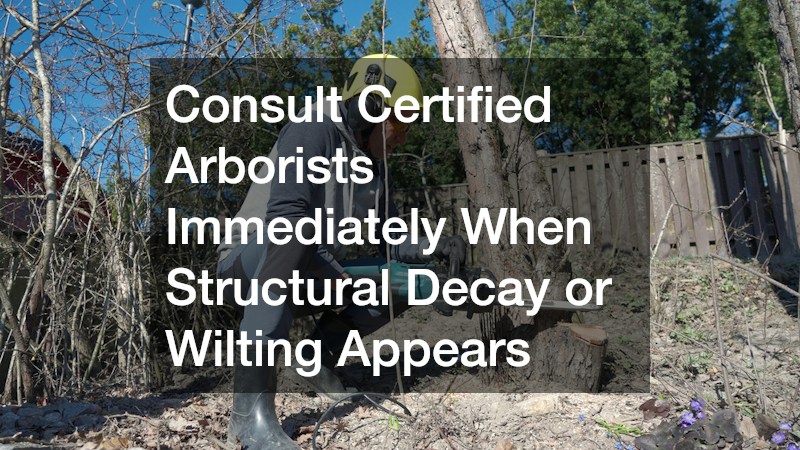
Consult Certified Arborists Immediately When Structural Decay or Wilting Appears
While routine watering, mulching, and sanitation can be managed independently, certain symptoms demand immediate diagnostic expertise and specialized intervention. Rapid canopy wilting, widespread vascular staining under the bark, sudden leaf scorch patterns, or major structural fungal conks indicate advanced internal distress. Certified arborists possess the diagnostic tools needed to accurately identify complex root diseases, vascular wilts like Dutch Elm Disease, or bacterial leaf scorch before irreversible failure occurs.
Distinguishing between minor environmental stress and lethal systemic disease requires specialized training in tree physiology and pathology. Many vascular diseases present symptoms that mimic simple drought stress, leading homeowners to overwater trees that are suffering from root decay or internal vascular blockages. An arborist can perform specialized trunk core sampling, root crown excavation, or laboratory testing to identify the exact pathogen causing the decline. Getting an accurate diagnosis early prevents wasted treatments and allows for targeted care before the tree becomes unsafe.
Early professional consultation often saves trees that would otherwise require complete removal if left unmanaged. Arborists can prescribe deep-root systemic treatments, micro-injections, or specialized soil aeration to restore declining root systems. If structural decay has advanced beyond safe management limits, professional tree removal services ensure that hazardous trees are dismantled section by section safely without damaging nearby power lines, homes, or hardscaping elements.
Preventing common tree diseases requires consistency, active observation, and an understanding of seasonal care. By inspecting foliage and bark regularly, maintaining clean tools, applying mulch correctly, and managing soil health, property owners can protect their landscape investments for decades to come. When severe symptoms or structural concerns arise, partnering with certified tree care professionals ensures that your property remains safe, beautiful, and resilient against environmental stresses.